India. Part IIMapMay 12–13, 2007 In India if a room has several lights in it the light switches look like this: 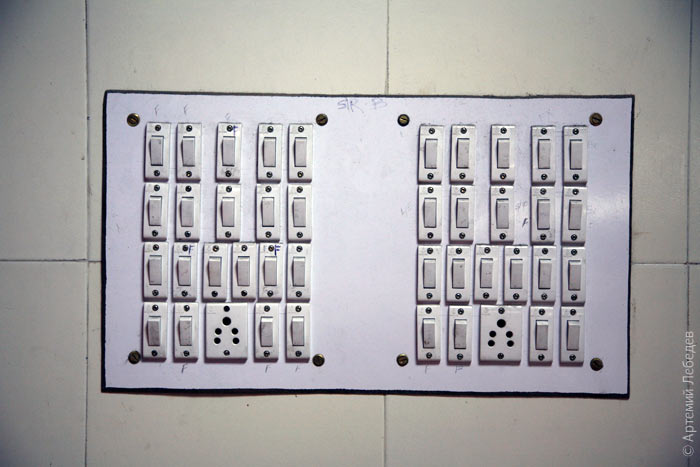 AgraMapFrom Delhi airport I went straight to Agra. The road as rather tiring and the scenery wasn’t particularly varied— four hours of driving along a highway at night surrounded by auto rickshaws, carts and cyclists without any lights. There’s absolutely, positively nothing to see here. Tea being poured. 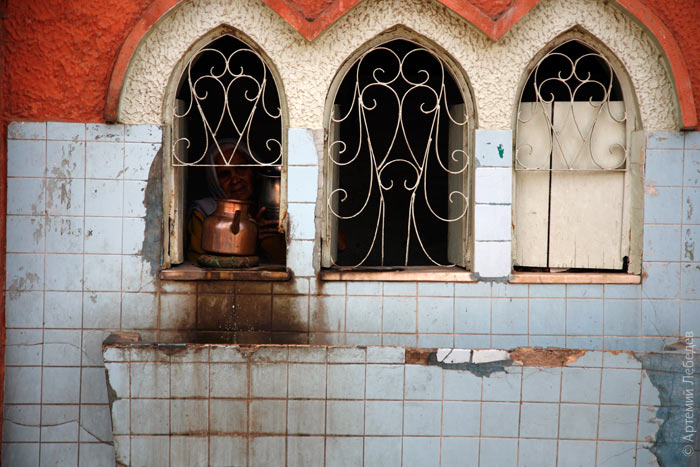 The traffic lights have only just recently been installed; the protective film hasn’t even been removed yet. 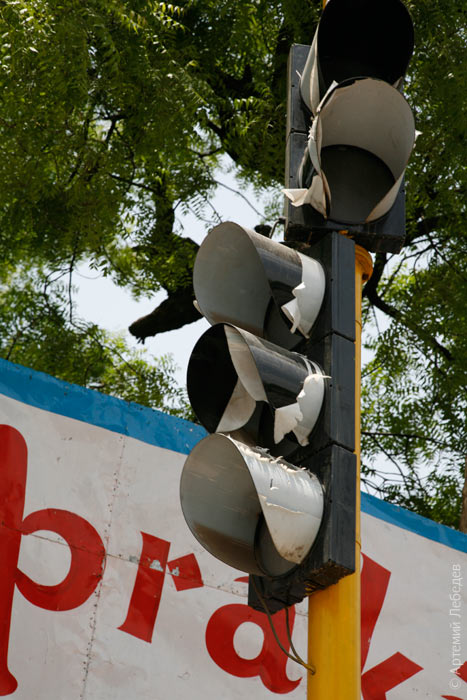 The only reason people go to Agra is to see the Taj Mahal. They’re doing everything they possibly can to protect this arch-national heritage. For instance, they stop all cars two kilometres from the Taj — from here on you must continue by bike, on horseback or on foot. This is done to stop exhaust fumes damaging this piece of national heritage. I’ve never really taken a proper look at it until now. It turns out that it’s a Muslim complex. The white building everyone photographs is a mausoleum built by the shah for his wife. Both of them lie in repose here. You can walk around the building or go inside. Inside it’s very dreary, everything is made out of white marble, and there are two coffins. 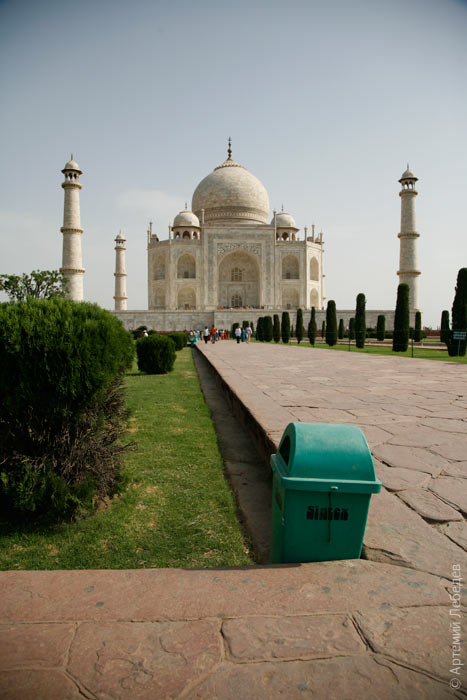 Out of all the art styles none bore me distraction like the Muslim visual style. The only thing more boring than mosques are modern-day Moscow metro stations. You get the feeling that the forefather of this style is the Taj Mahal itself. It doesn’t stand comparison with the Guri Amir in Samarkand (see the first photo of the Uzbeksitan story). Although both structures are mausoleums, one draws in the eye, whilst the other is clinical and lifeless. 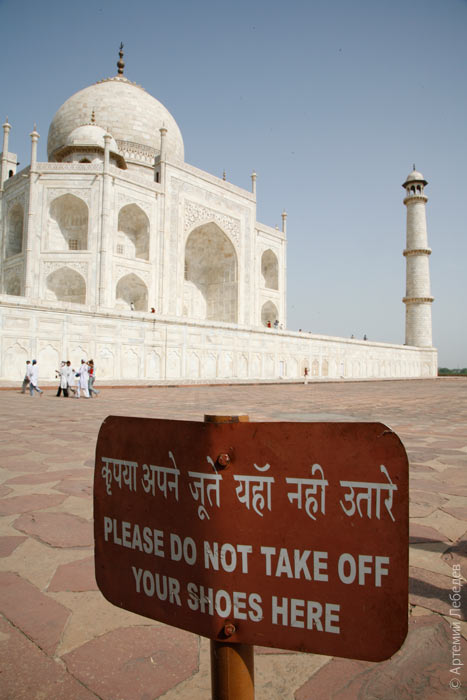 By the way, Shah Jahan, who built the mausoleum, drained the reserve fund to do so. His own son threw him in jail for it, in order to prevent him from driving the country into bankruptcy. The prison is a little while away, but the Taj Mahal is visible from there. It’s where I took yet another advertising pic featuring the “Ridibundus” (this particular smiley face was first photographed on Easter Island). 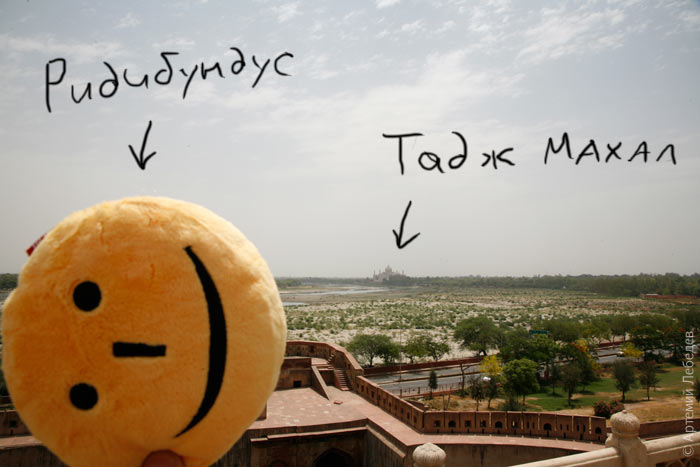 Ridibundus Taj Mahal Indians are superstitious. That’s why the following set of lucky charms can often be spotted on buses: a black fox (which looks like a little devil and wards off something or rather), some sort of black tail (from who knows what), plus a lemon and a pepper. The lemon and pepper combo is a key component of car insurance. 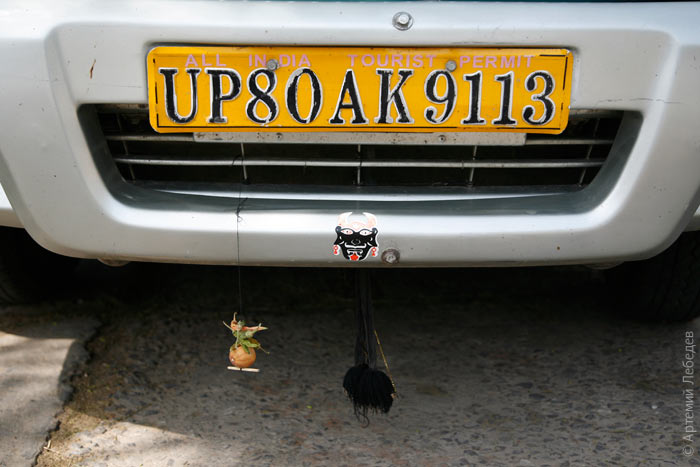 My driver, a Sikh, has just hung up a new lemon and pepper set because there are strict rules: you must change the composition once a week. Leave it a day late and who knows what will happen. 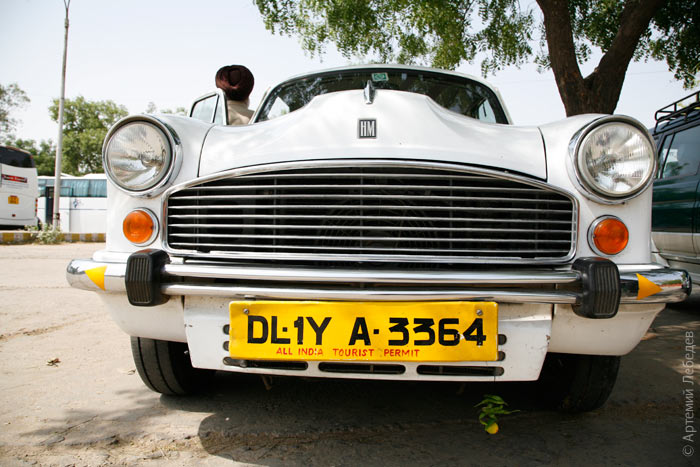 At state borders there are checkpoints of various kinds, their main purpose being to collect money. Roadside information signs spell out who is exempt from payment. Good luck trying to read this, even at low speeds: 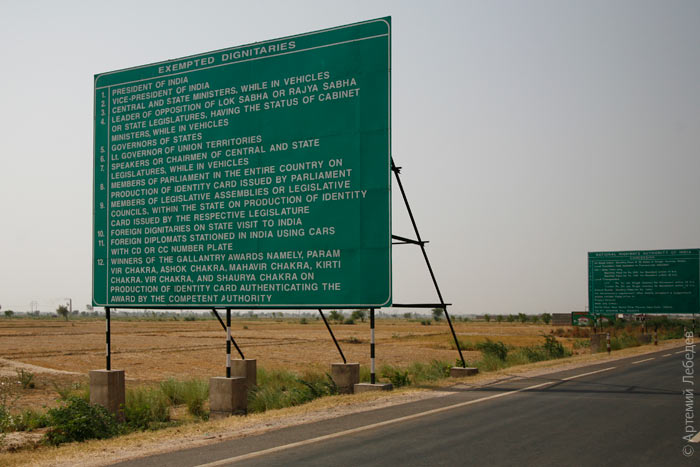 DelhiMapThe road back from Agra is just as exhausting as on the way there. The highway looked fairly wide, but trucks driving in the right-hand lane take up all the space (although they’re supposed to be inching along on the left). 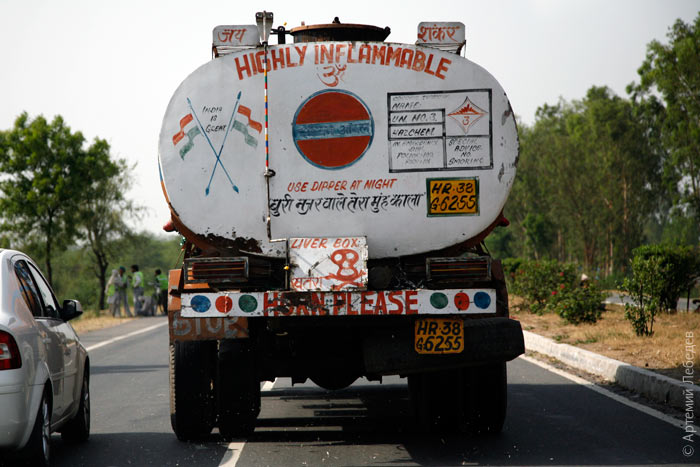 Sometimes cows cause traffic jams. 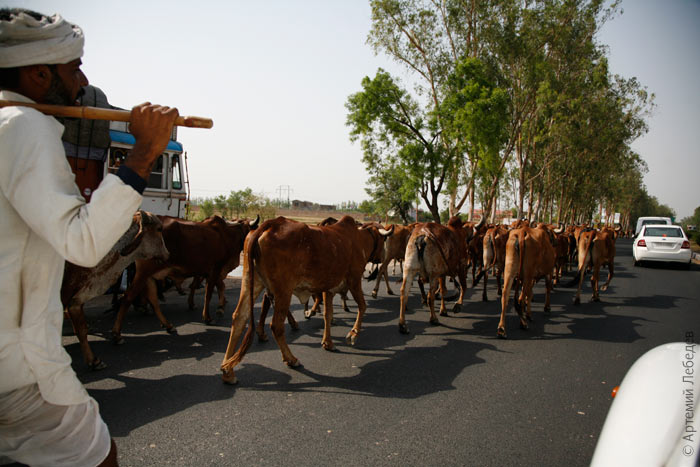 To stop drivers from flying into fits of road rage traffic lights tell them to relax. 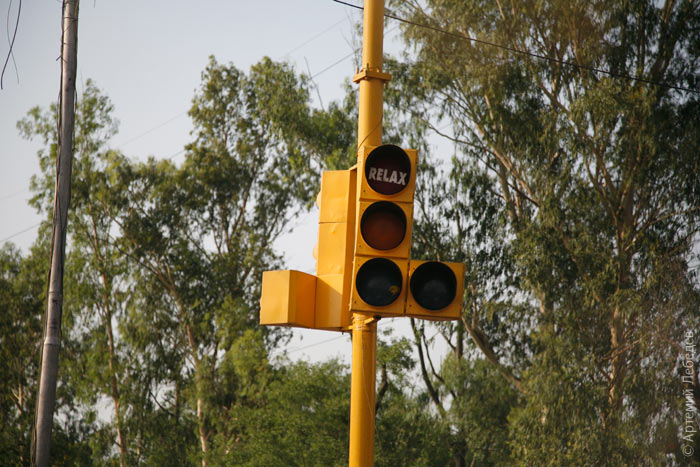 Delhi is divided into two parts — the old and the new. New Delhi is nothing to write home about. 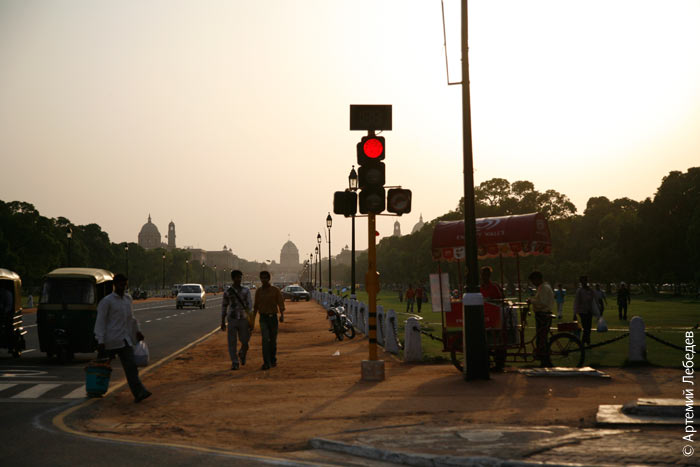 The centre of the new part of town resembles Moscow’s Manezhnaya square to a tee, the only difference being that there’s no kremlin in the background. 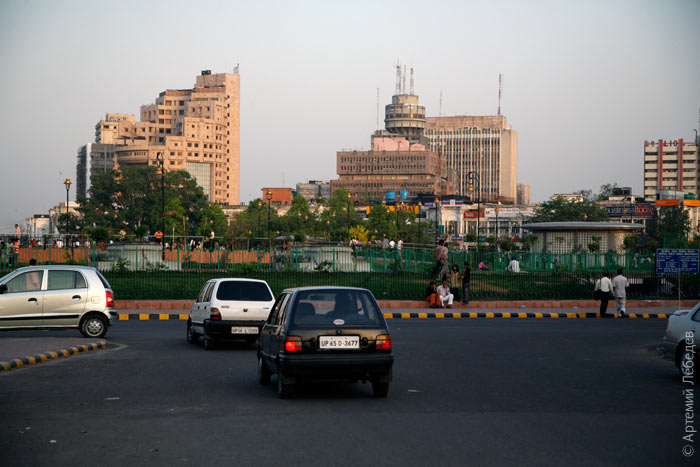 What will you find if you look behind you any given building? That’s right, guys standing there, taking a leak. 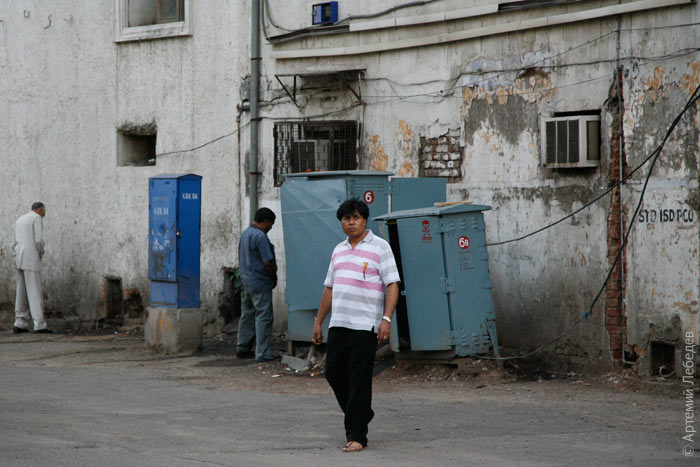 The old part of Delhi — the Muslim part — is much livelier. 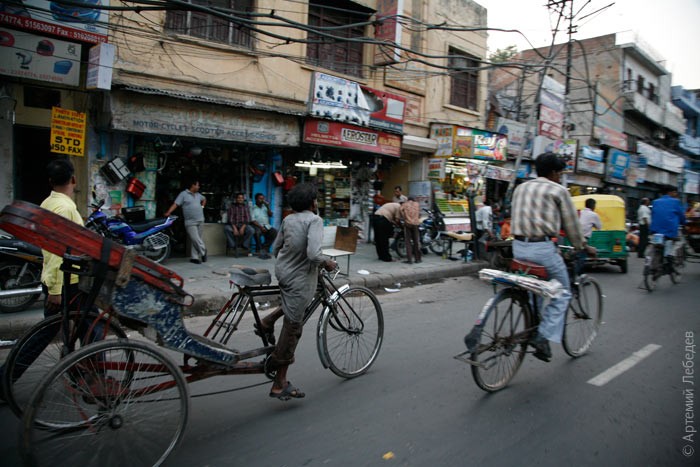 I didn’t manage to get a good look at India. I absolutely must come back here to see it properly instead of just passing through.  |
