Ethnographic Expedition 2008. Part XIIINovember 27—December 2, 2008 ErzinMapI got out at the main square, next to the market stalls and the cafeteria. I’d been first in line to cross the border (thanks to the customs officer at whose house I’d spent the night), but it still took forever, and it was now almost 3 p.m. I asked the locals where I could find the traffic police—maybe they had a tow truck? I went to the cafeteria. A hearty lunch at the cafeteria costs 80 rubles and includes soup, a main course, bread and a fruit drink. An ethnographic fact: Tuvan women always wear their hats indoors. And their hats look like something from an Alice in Wonderland illustration. 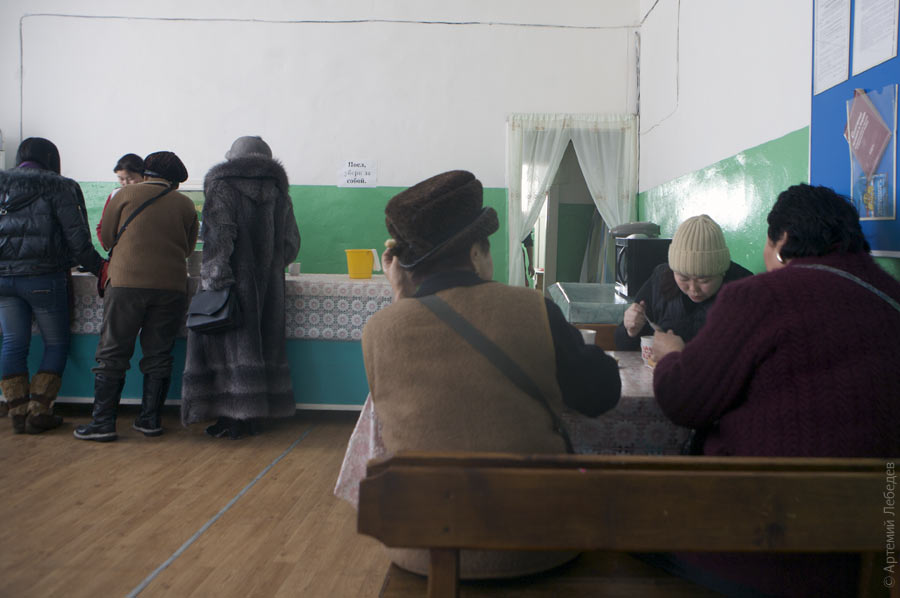 Interacting with a local resident served in lieu of my arrival registration. They found me in the cafeteria. A traffic cop, border official and FSB officer were already waiting outside. The first told me that the closest place I could find a tow truck would be Kyzyl (200 kilometers away), the second concluded that everything must certainly be in order with my documents, and the third asked where he could find the Mongolian who had towed me there (he’d lost sight of him and was very concerned). I took a taxi to Kyzyl to look for a tow truck. Tuva looks pretty much like Mongolia, only the roads are paved. 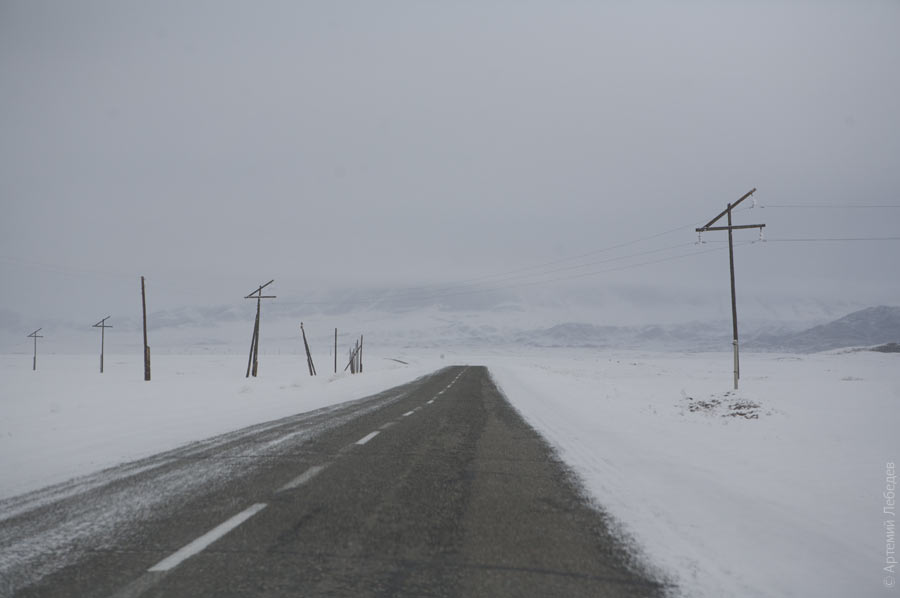 The traffic signs here are remarkably pedantic. 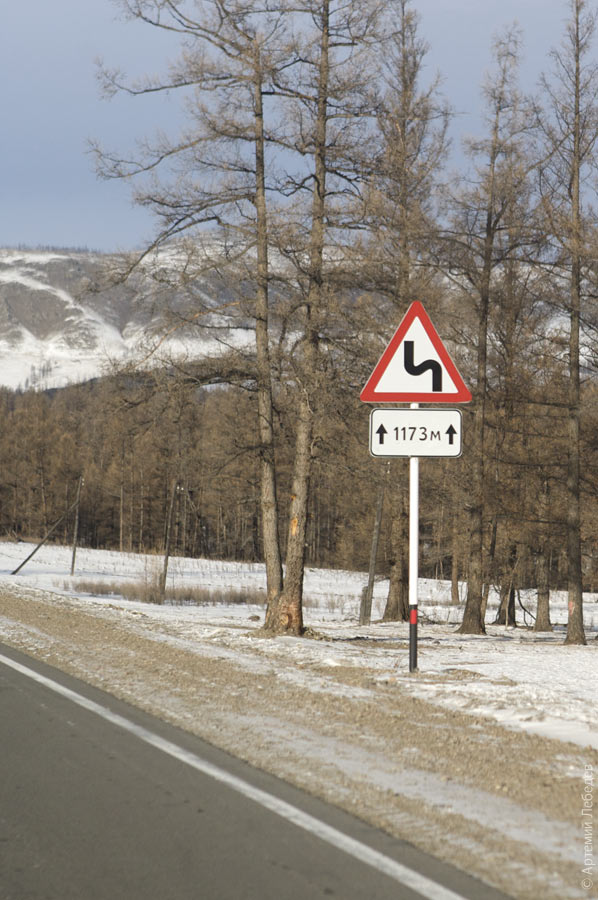 KyzylMapHow do you find a specific kind of truck in an unfamiliar city? Easy as pie: just ask any truck driver. Nikolayich, for instance, keeps a piece of cardboard with colleagues’ phone numbers in his cab. 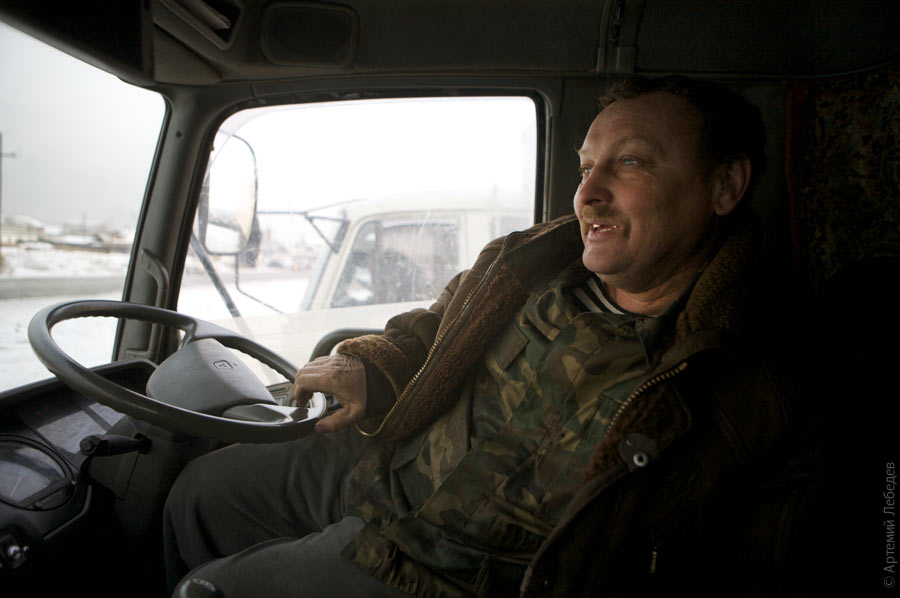 A person by the name of Orman was listed as the driver of the only private tow truck. I called, and a cheery Japanese logging truck of the right width showed up. The driver’s name turned out to be Arman, though—he was Armenian. We drove the 250 kilometers back to the border. Along the way, Arman stopped to pick up a buddy of his, a drunk elderly Armenian with a Tuvan girlfriend in tow. The girlfriend immediately fell asleep behind the seats, while the old man pulled out a bottle of vodka along with some cheese and cold cuts. I ended up drinking with him until the very border. Tsagaan-TolgoiMapMoumousique had an ideal anti-theft system, thanks to which I had to be towed on or behind various trucks for a thousand kilometers across Mongolia. Arman was hesitant to use the crane; instead, he proposed that I drive onto the truck over some boards. The only thing in my car that was still functioning was the winch. I got halfway up onto the bed, but then the winch suddenly stopped working. What happened was that the motor for Moumousique’s right headlight wiper had inexplicably seized up (I always thought headlight wipers were an asinine idea). The jammed motor had drained the battery, so the winch stopped working. The timber crane hauled me the rest of the way up, making a sizeable dent in my trunk door in the process. By five in the morning, we were back in Kyzyl. Around noon, Arman called to tell me that the logging truck had had a major breakdown—the clutch cable was torn, and he could only get a new one in Abakan or Krasnoyarsk. Thus I found myself in possession of an entire day to walk around town. KyzylA dreary city, let’s be frank. 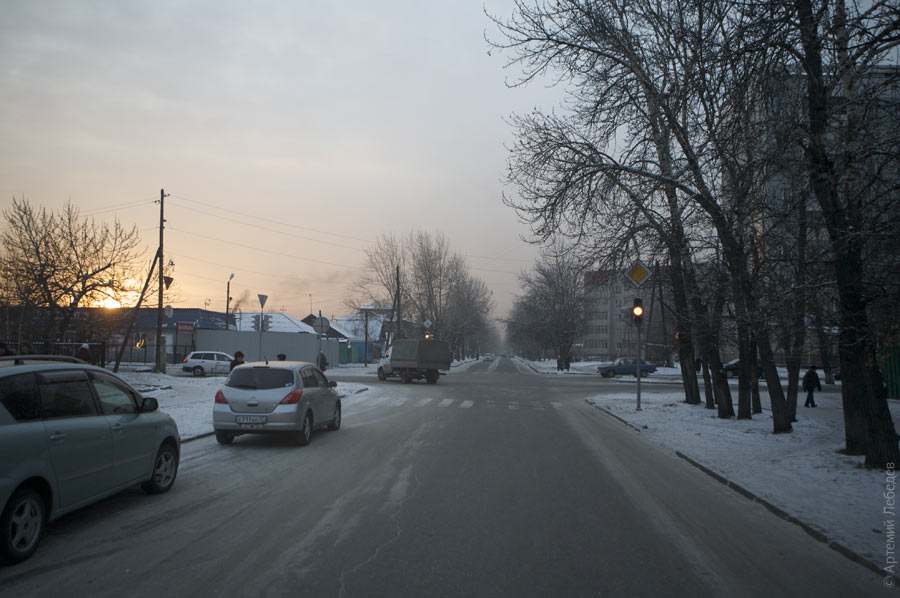 I would even go so far as to say that Kyzyl is the ugliest city on the entire route of the ethnographic expedition. It made even Miass seem less terrible. Kyzyl was appointed the center of Asia at one point, and a rather ugly obelisk was even put up on the bank of the Yenisei River to commemorate this fact.  There’s a memorial plaque on the wall of the school that the Minister of Defense attended. 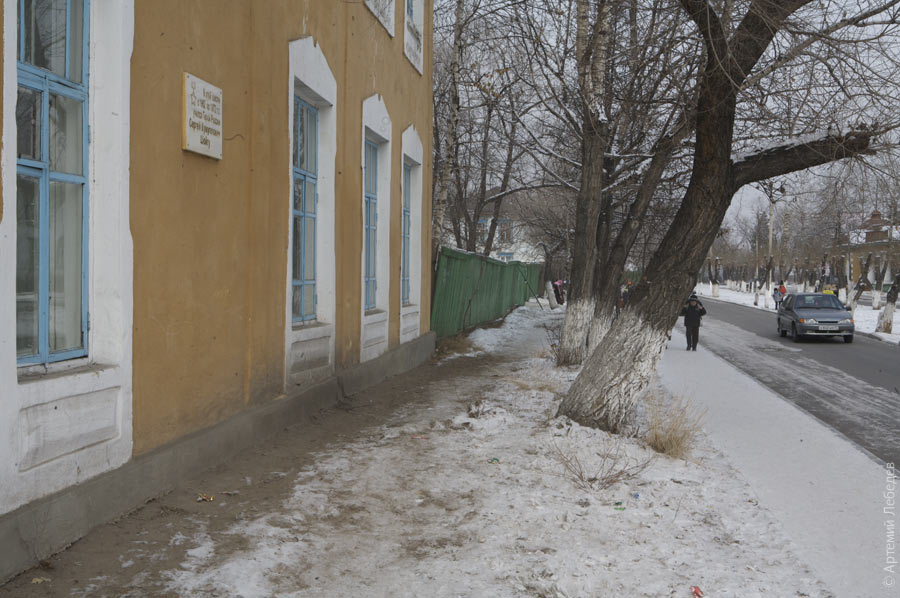 Everything here is either Soviet crap or in shambles. 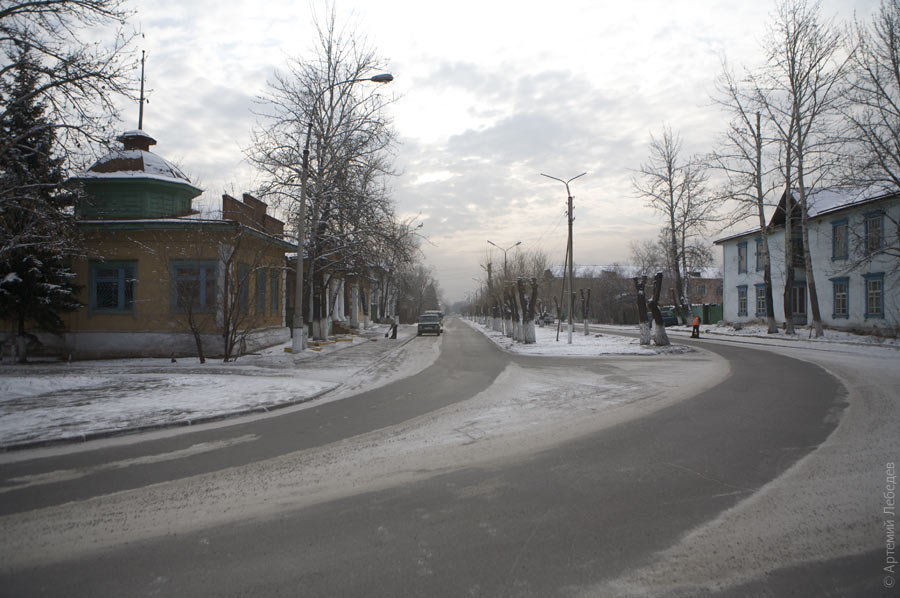 Trash cans in the shape of hungry penguins are something you usually find in port cities. 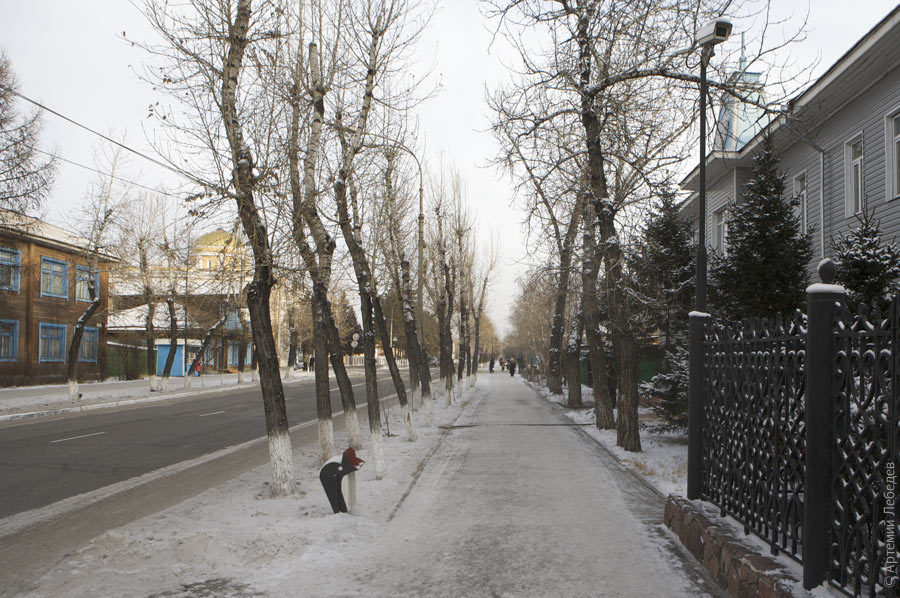 Ramps have been stuck onto the sidewalks (which is a good thing—even Moscow doesn’t have this). 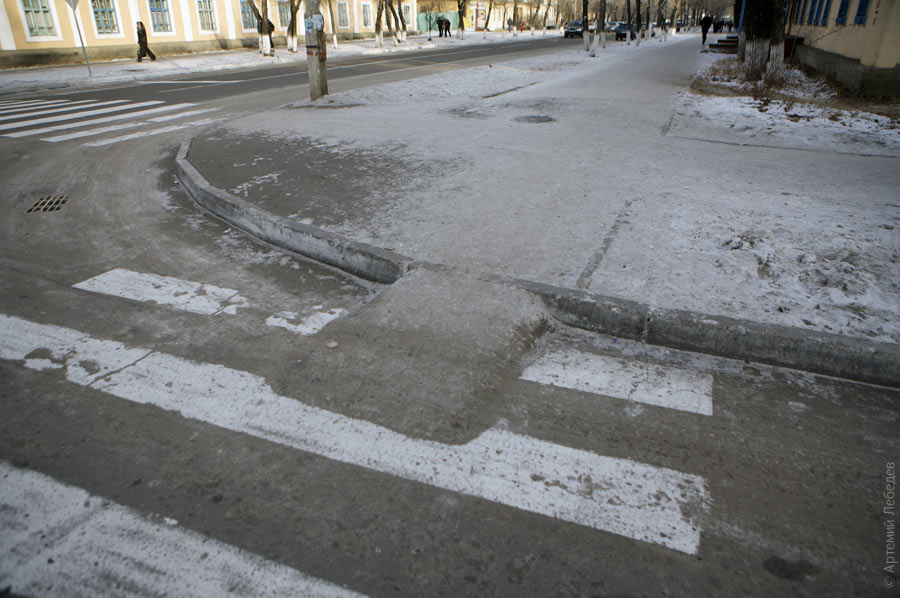 There are ethnic trash cans and some sort of Chinese lions outside the city administration building; a Buddhist prayer wheel stands in the square facing the entrance. 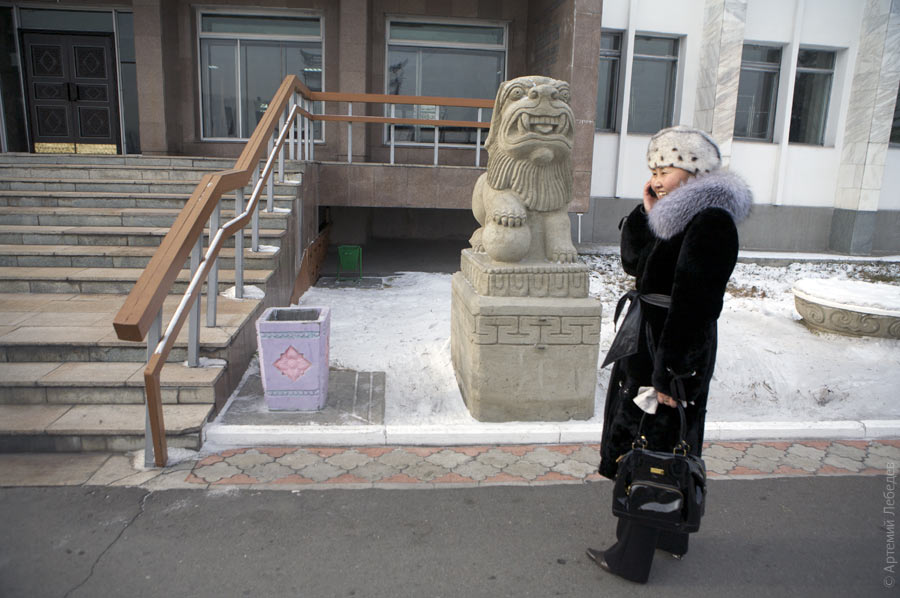 Yet the Sovietness remains unmistakable. 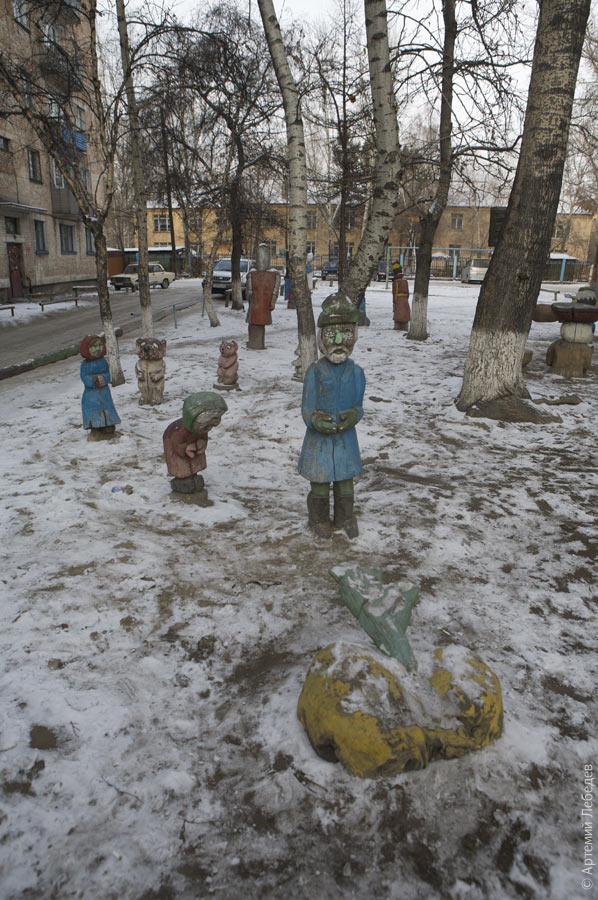 A rare find: a school building with a color bas-relief. This is about as common as finding a painted Greek or Roman sculpture (all the statues we’re accustomed to seeing in white marble were originally covered with a thick layer of garish paint). 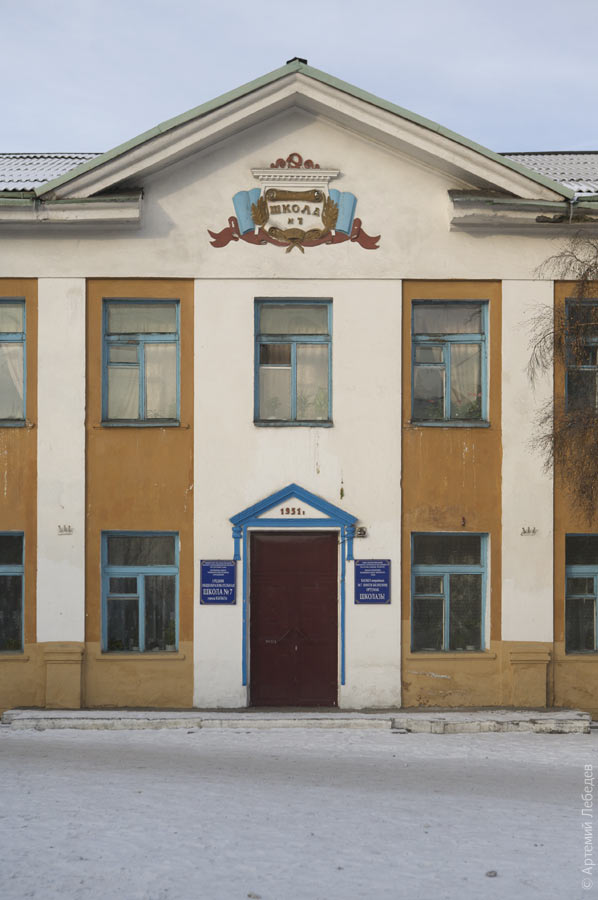 School #1 If you cross a Chinese pagoda with a Moscow street sign, you’ll get the Kyzyl street sign. 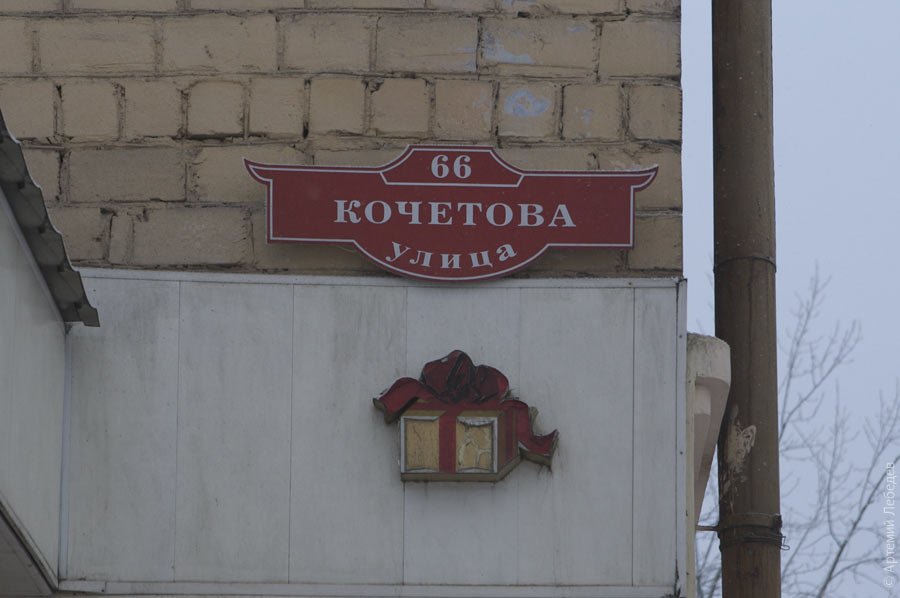 Bus stops have extra benches to the right and left of the bus shelter. 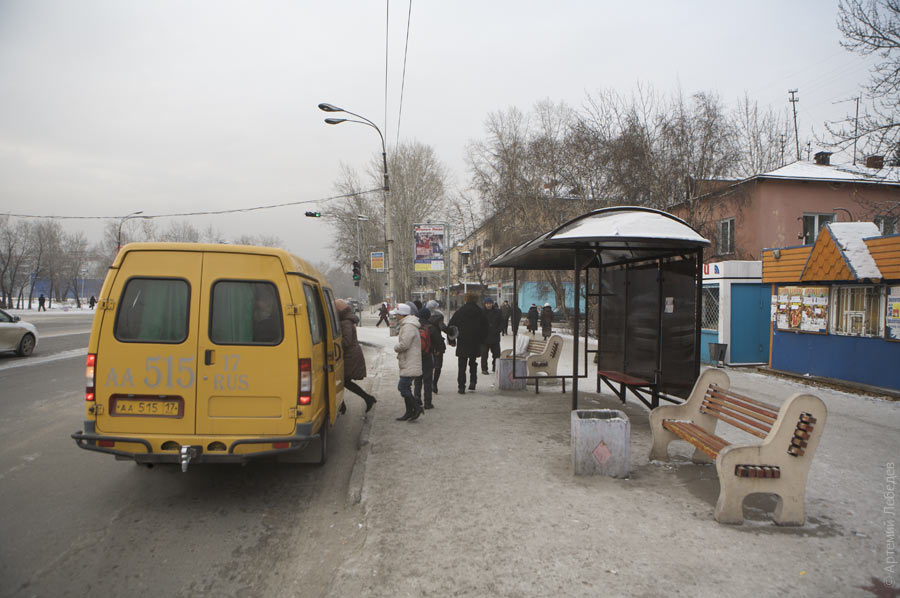 The concrete lampposts have an octagonal cross-section. 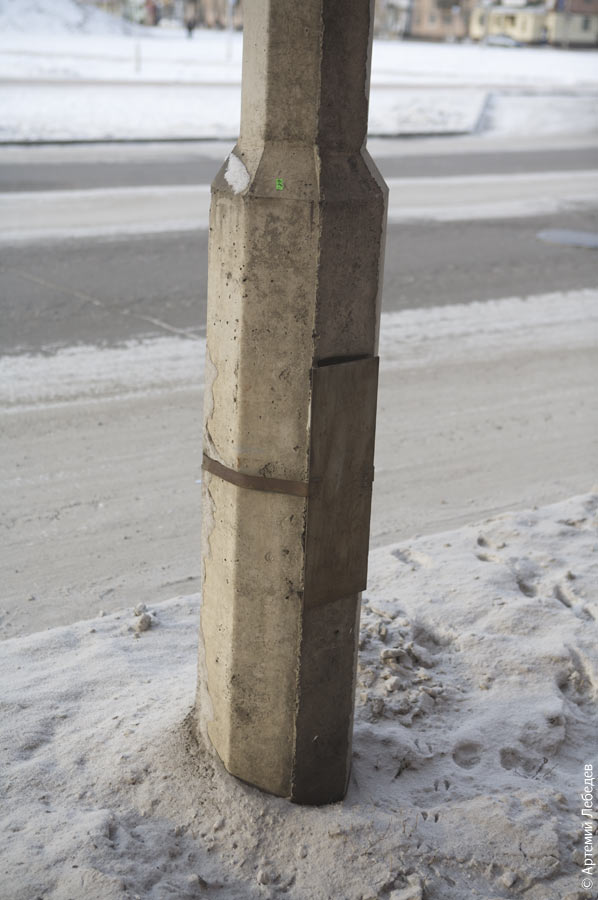 Municipal creativity is flourishing. I always wonder: what exactly are you supposed to do after reading a slogan like this? 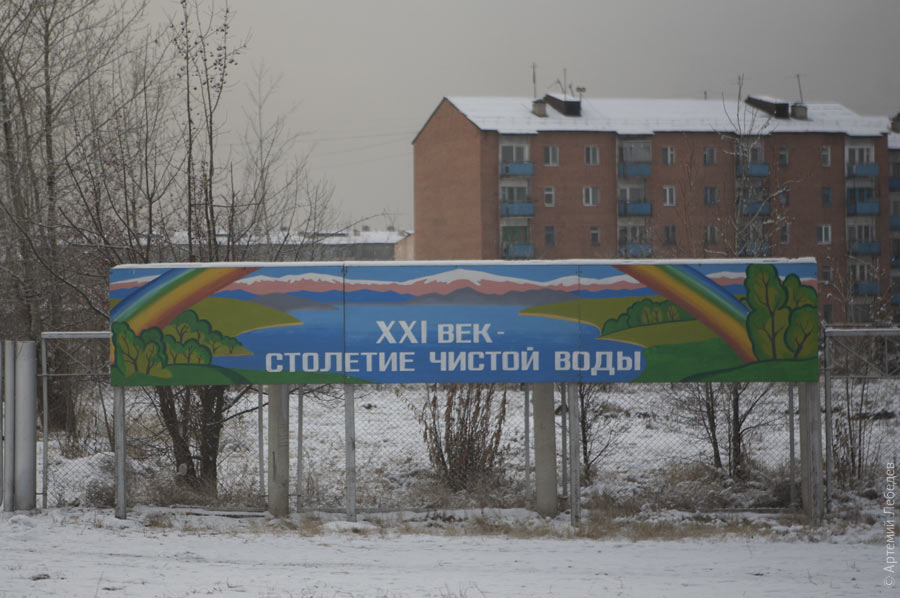 The 21st Century—A Century of Clean Water In their fight for ethnic spelling, Tuvans are trying to get „Tuva“ replaced with „Tyvа.“ But the feds are slow to catch on. 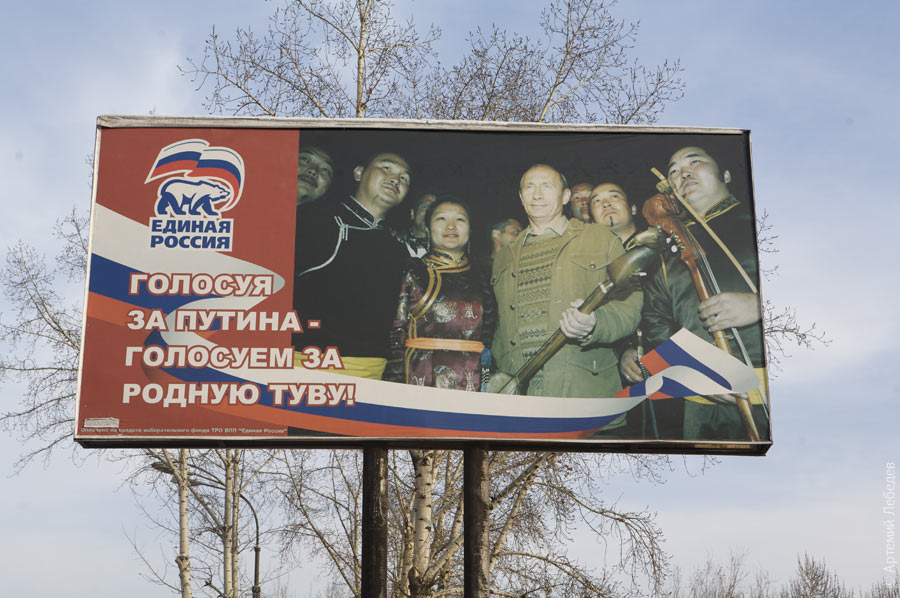 United Russia. When we vote for Putin, we vote for our native Tuva! The traffic lights downtown have an extra section—a loudspeaker for the blind. The beeping sound it makes is extremely loud and annoying. I don’t understand why the blind aren’t issued special cards to make traffic lights beep only when they’re in close proximity. First of all, there wouldn’t be any unnecessary noise, and second, drivers would automatically start paying more attention to make sure they don’t run over a blind person. 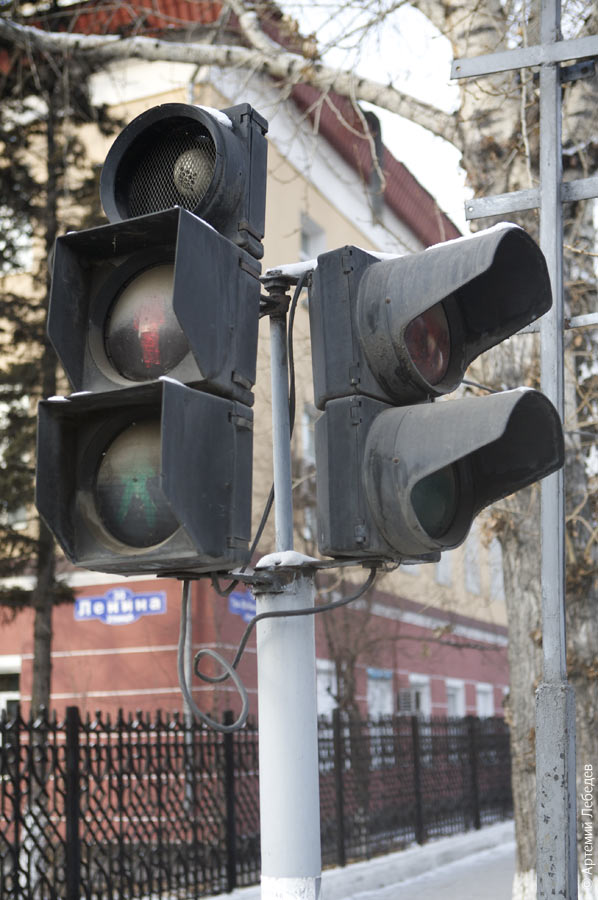 As I was walking past a toy store, an ex-con and vague Yeltsin lookalike named Lyokha asked me for a light and requested that I pass on his greetings to the people of Moscow.  Shamanism is officially practiced here. 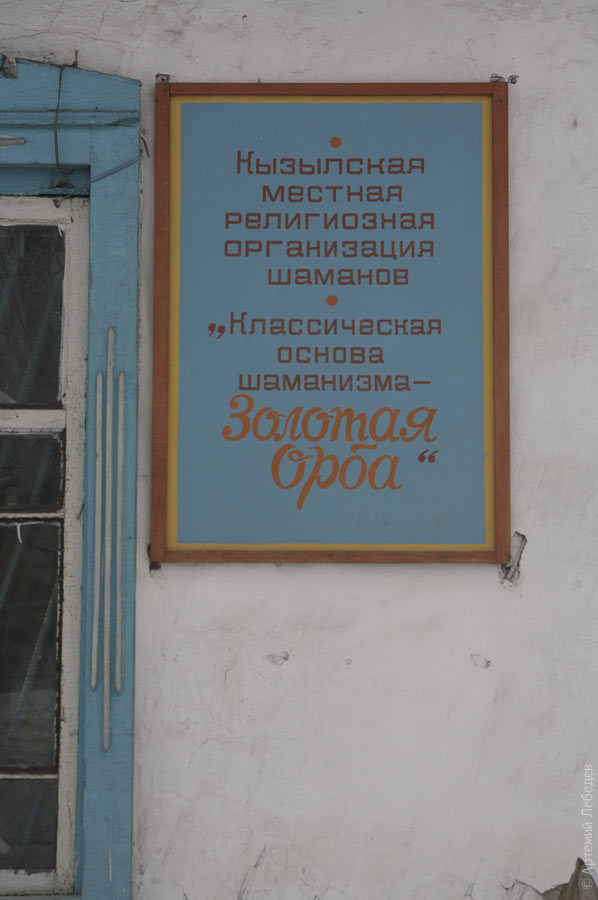 Kyzyl Local Religious Organization of Shamans. „The classic foundation of shamanism is the Golden Orb.“ I love stupid premieres (I’ll never forget Wet Firewood, the first film to be made in Kaluga, and East Timor’s first-ever feature Beatriz’s War). So there was no way I could miss the evening premiere of the first-ever Tuvan horror film. The 705-seat venue was completely full, and there were about fifty more people sitting with me in the aisles. A projector had been set up in the tenth row of what is normally a musical drama theatre. A wrinkled cloth with creases spanning the whole stage served as the screen. The lights went down; the sponsors’ logos appeared. Suddenly, a cursor floated onto the screen and closed the video window, then opened another file with the sponsors’ phone numbers. The plot of Kelin Kystyn Khomudaly (The Damned Place) is simple. Two buddies, one of whom moonlights as a driver, take some pills left behind by a passenger and start hallucinating that a dead woman is chasing them through the woods with an ax. The movie is completely trashy and ultra low-end, with subtitles in Russian (I’m pretty sure I was the only Russian in the room). But the audience’s reaction was absolutely amazing. It’s as though no new movies are ever shown in this city. The entire theatre shrieked loudly and unanimously the whole way through, adding to the movie’s entertainment value and making it feel more complete. Later that night, I failed to pass „face control“ (i.e. get past the bouncers) at Kyzyl’s Sin City nightclub. Walking around Kyzyl after dark is strongly discouraged, by the way. The following day it snowed. 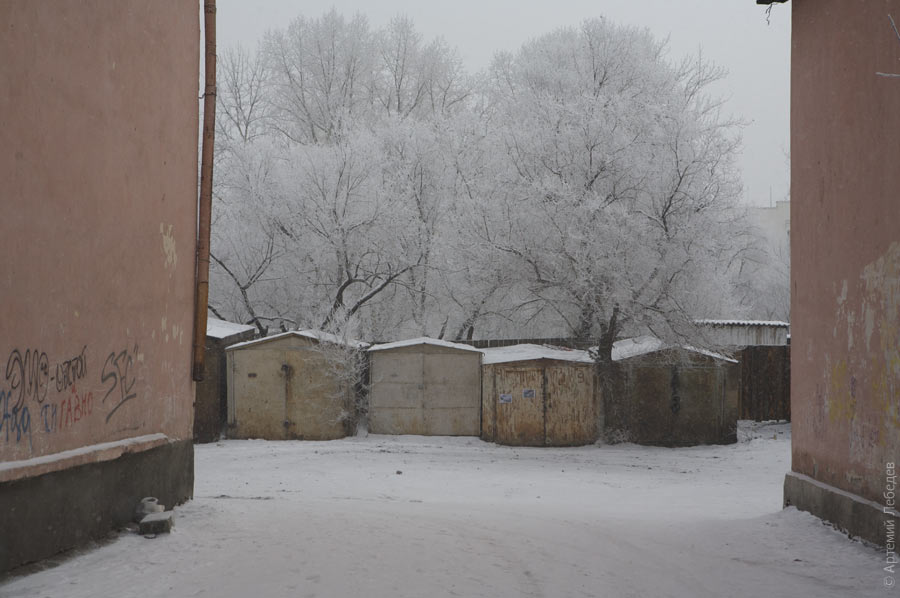 The hotel situation in Kyzyl is really, really bad. Under no circumstances should you let yourself be swayed by the high prices at Odugen and Cottage (which are located right next to each other). Instead, get one of the renovated rooms at the Kyzyl Hotel. It’s worth the price, and the rooms have an excellent view of the past. 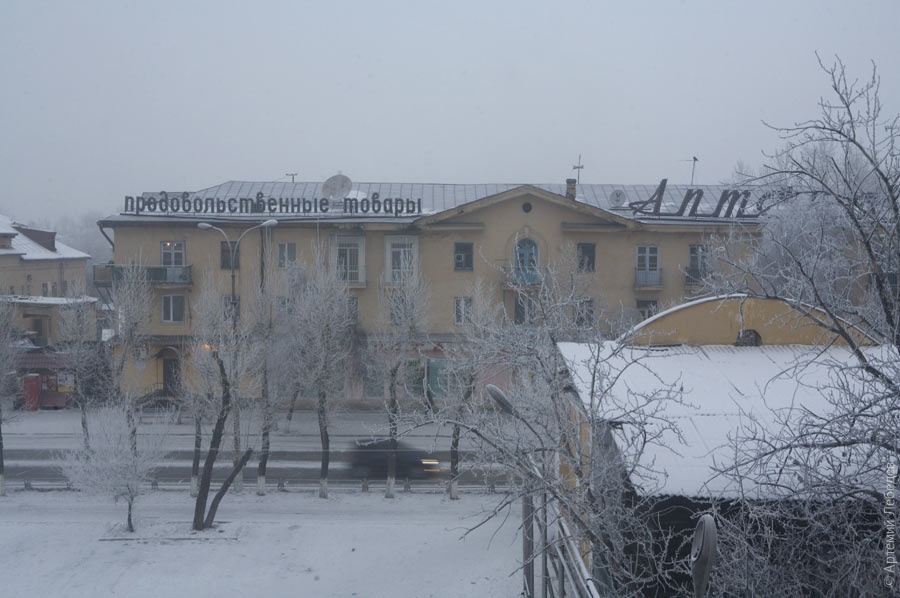 Grocery Store; Pharmacy Arman’s logging truck ended up being incapable of going any further. 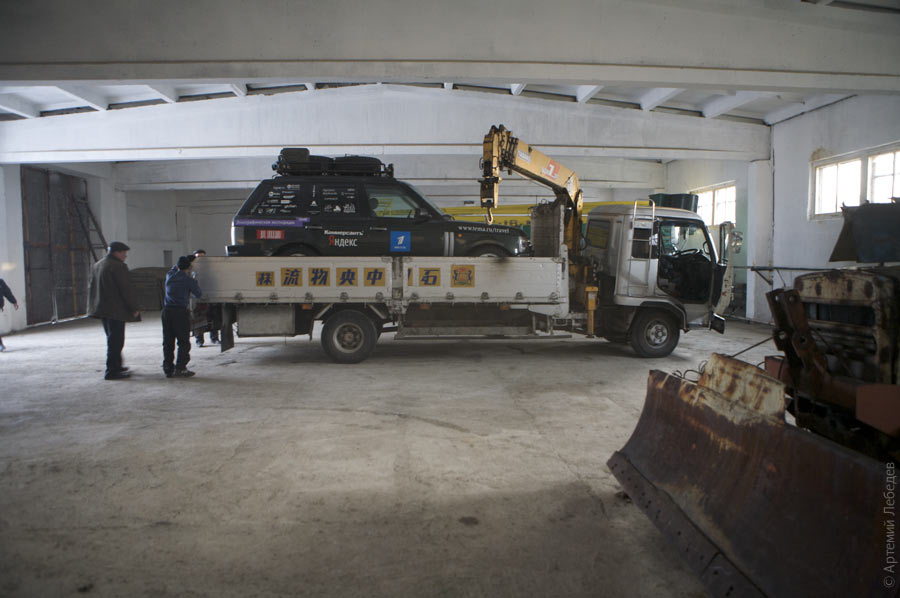 So I had to make a deal with Yura. We manually pushed Moumousique off the logging truck and into the box truck. 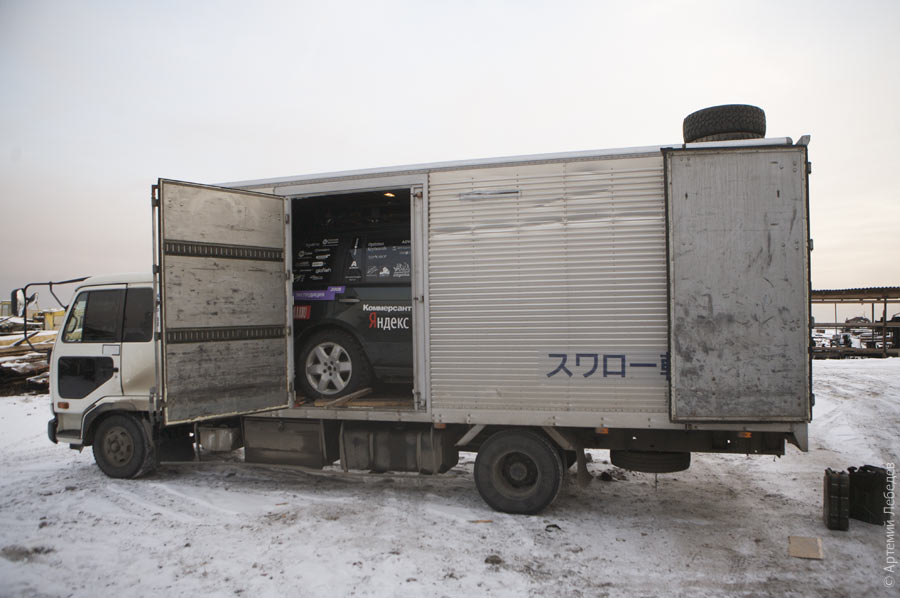 Arman came with us: whatever the case may be, he still needed to buy that cable. 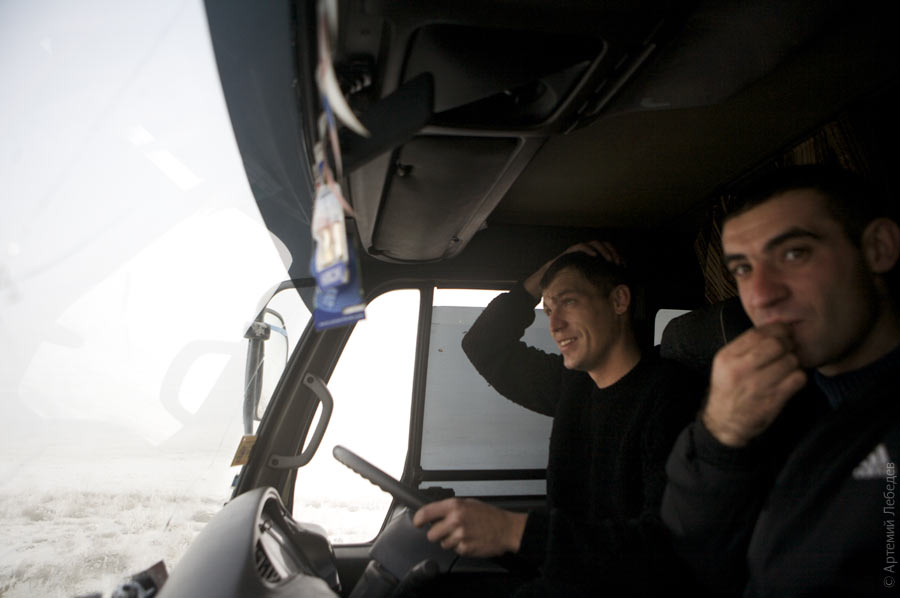 The distance from Kyzyl to Krasnoyarsk is about 800 kilometers. 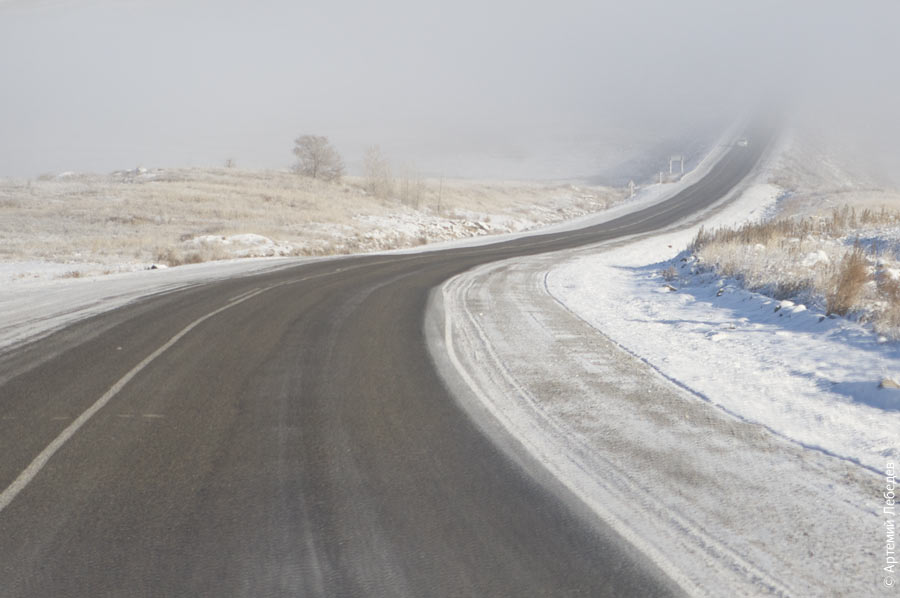 KrasnoyarskMap
It’s just as great in the winter here as it is in the summer. The Krasnoyarsk Hotel has a beautiful view of the Kommunalny Bridge, which appears on the 10-ruble bill. 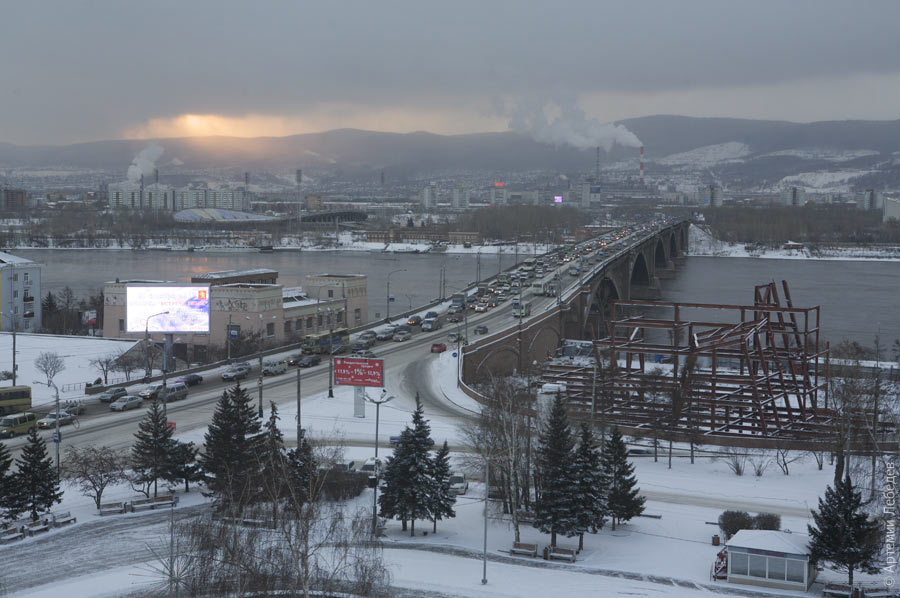 We arrived on Saturday but needed to wait till Monday to drop Moumousique off at the shop. So I had two whole days for walking around. I came across some visor-less traffic lights. 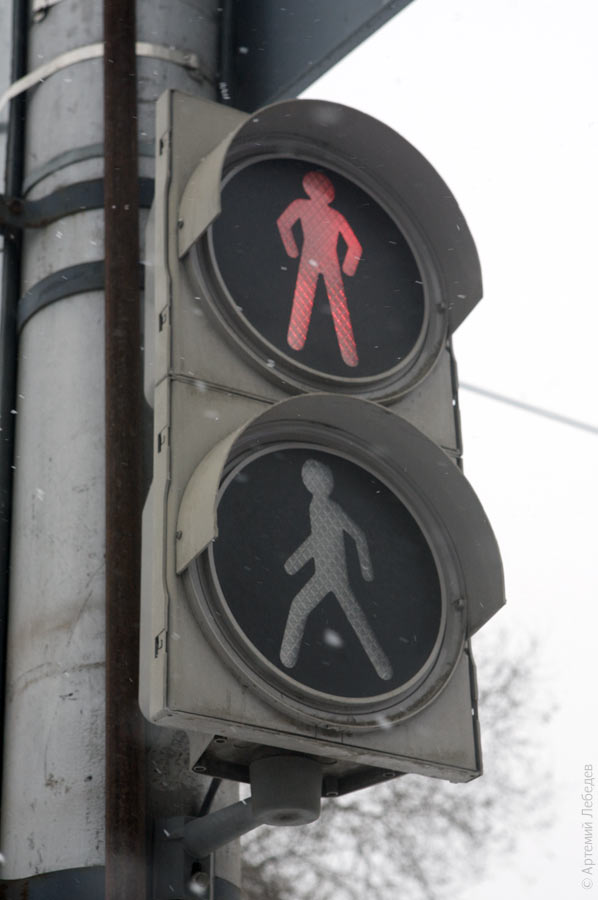 There are fancy snow removal trucks in the streets. 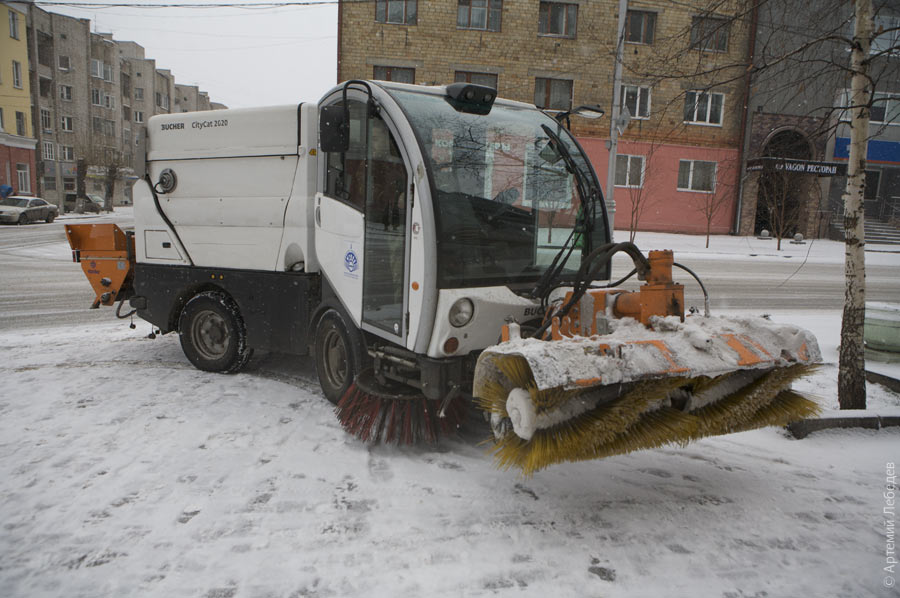 They’ve come up with an excellent idea on the buses: tear-off sheets with more information that are meant to be hanging from the binder rings under the ads. There’s nothing actually hanging there, of course. But the idea itself is great. 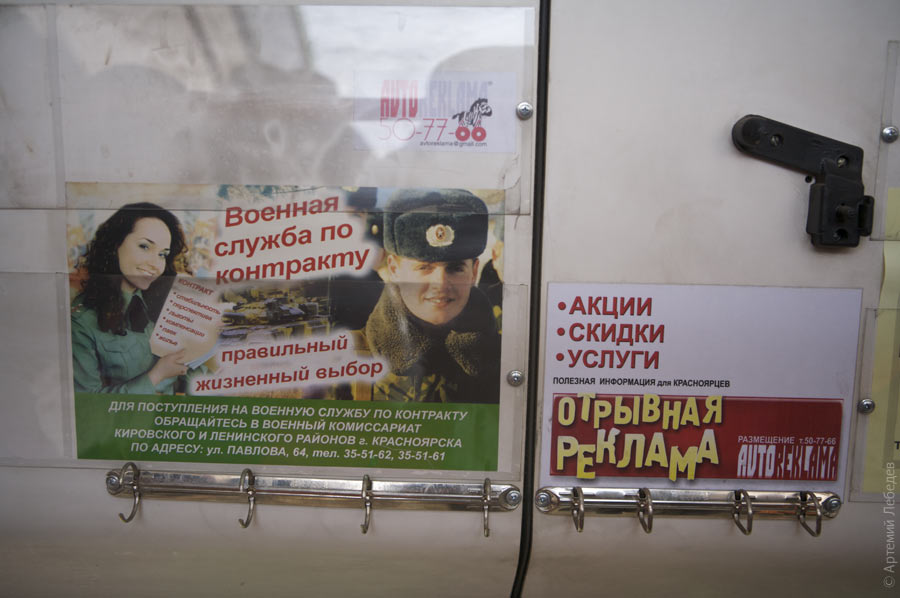 Contract military service: it’s the right choice. Specials, sales, services—useful information for residents of Krasnoyarsk. Tear-off advertising. The chestnut trees so beloved by the mayor require winter caps so that they don’t freeze. The local mayor also loves fountains; he’s installed them in every courtyard. 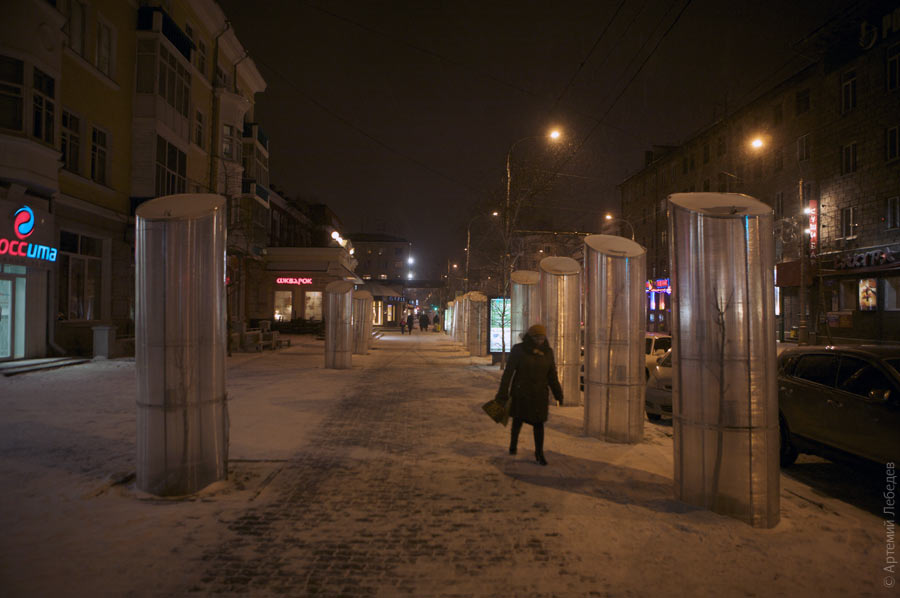 The lampposts downtown have loudspeakers playing nice music. The sound is very well configured and completely echo-free. You feel like you’re in a movie when you walk down the street. It’s −27°C outside. 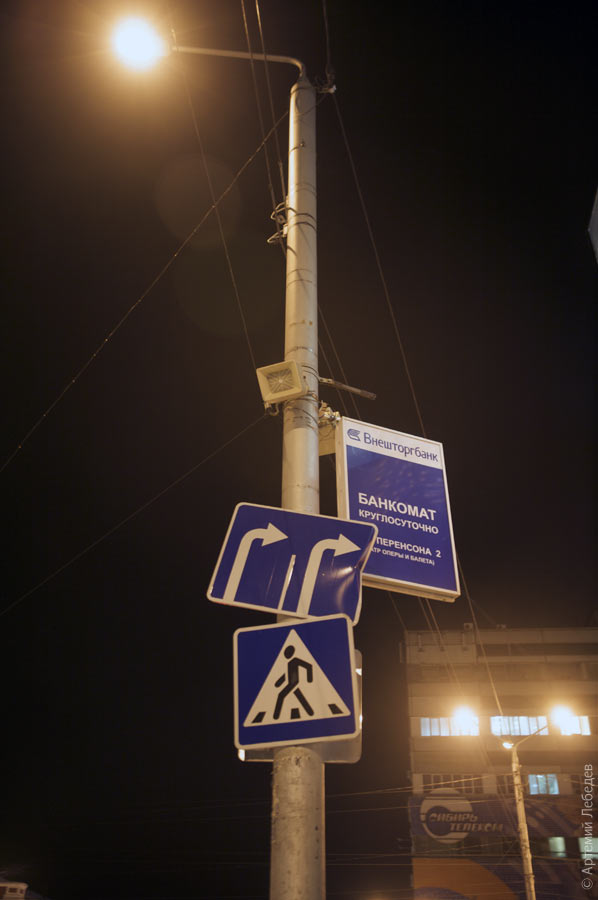 The weekend flew by splendidly. Krasnoyarsk has an unexpectedly high concentration of very pleasant drinkable and edible establishments. It was time to load out Moumousique. In order to get the car out of Yura’s truck, I had to find a tow truck. Meanwhile, the car battery had died to the point where the key fob wouldn’t open the door. I had to use the jump starter in the emergency kit. We barely managed to get the sad carcass of a car onto the tow truck, but then it wouldn’t come back down because we’d let some air out of the tires (to prevent it from bouncing around in the trailer). Finally, once we’d inflated the tires, Moumousique slowly rolled down to the ground and stayed put. 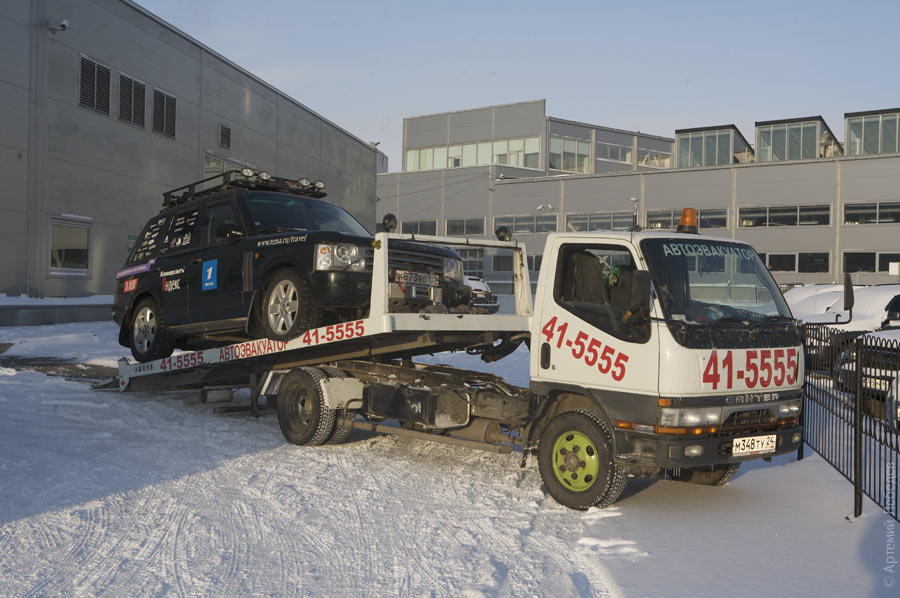 I got everything out of the car and held an auction later that evening, selling off all of the expedition’s assets: the tent, the sleeping bag, the crates, the fridge, the gas cylinders, etc. The proceeds came out to 30 000 rubles—the cost of one of Moumousique’s wheels. The next day, I flew back to Moscow. 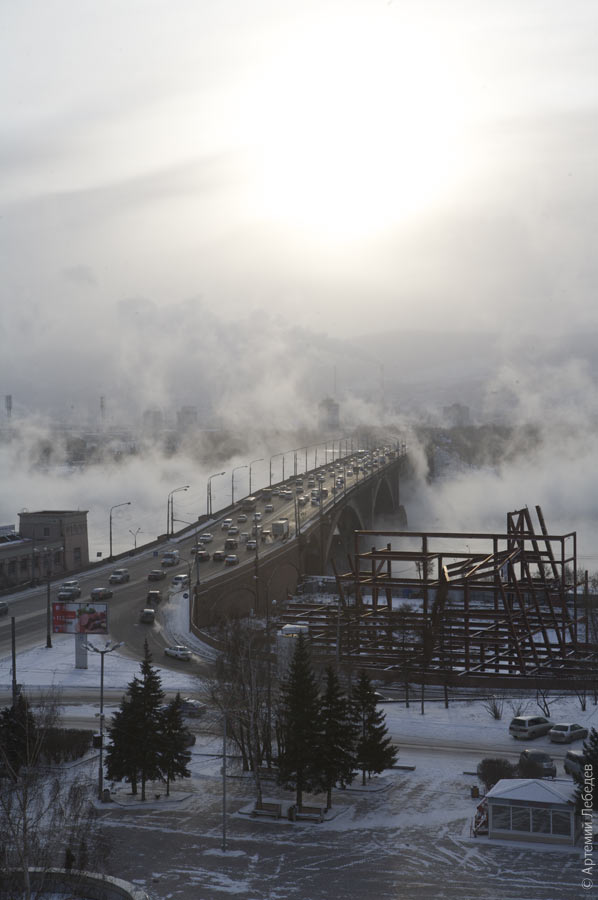 And so the ethnographic expedition came to an end. And that’s a true story—if you don’t believe me, go see for yourself. |
